

Over the past few years, wealthtech vendors have rushed to attach AI language to products promising greater efficiency, better personalization and smarter advisor workflows. But industry experts say the market is now facing a more practical question: Which capabilities are genuinely AI-driven, and which are automation, analytics or legacy tools with new branding?
Advisors are beginning to demand proof. While AI is delivering real gains in areas such as meeting preparation, documentation, onboarding and client communications, experts say many broader claims remain more marketing than reality.
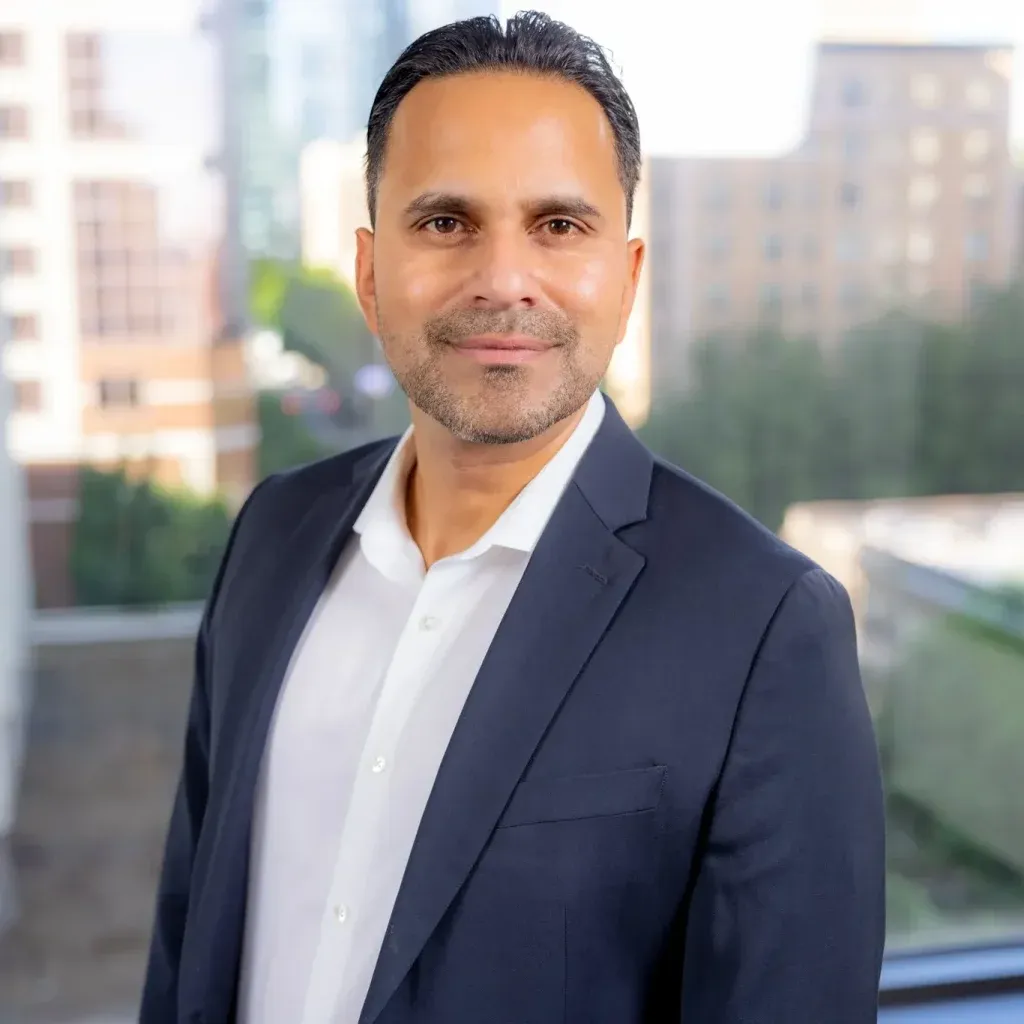
“A shakeout is coming, and compliance will drive it,” said Sid Yenamandra, Founder and CEO of SurgeONE.ai, which specializes in regulatory technology (regtech).
“AI washing” occurs when vendors market a capability as AI-based even though it is primarily rules-based automation, conventional analytics or a workflow tool with AI language attached. In wealthtech, experts say the distinction matters because advisors are not just buying software; they are relying on these tools to support client communications, compliance decisions and business growth.

“I vouch for genuine AI that goes beyond task automation; it enables real-time, connected intelligence,” said Babu Sivadasan, Co-Founder and CEO of JIFFYAI. “It brings together data across systems, delivers predictive insights, and supports hyper-personalized, timely decision-making. Genuine AI meaningfully enhances advisor judgment, client engagement, and speed of execution. If not, I would say, it’s likely to be just well-packaged automation or analytics.”
The question is how much wealthtech vendors can actually meet that standard.
AI Washing Is ‘Everywhere’
Many products look like AI and are packaged as AI, but depend more on effective marketing rather than actual value.
“It’s common and it’s everywhere,” said John O’Connell, Founder and CEO of The Oasis Group. “The tell is language: firms that say ‘AI-powered’ but mean rule-based automation, or ‘intelligent’ when they mean a better filter. Real AI learns and adapts. What too many wealthtech vendors are shipping is conditional logic with better UX and a larger marketing budget.”
Yenamandra agrees.
“It’s rampant, and it’s most dangerous in compliance,” he said. “Vendors rebrand rules-based lexicon matching as ‘AI surveillance’ and keyword filters as ‘intelligent monitoring.’ Regulators don’t care about your marketing — they care whether the output is defensible. If the system can’t learn, adapt or reason across novel inputs, it’s not AI.”
Discerning Real AI

“Automation executes a path someone has already defined. AI shapes the path,” said Susan Theder, Chief Marketing and Experience Officer of FMG. “Real AI learns from data, improves with use, and produces outputs deterministic logic cannot. Analytics tells you what happened. Branding tells you what to believe. Neither is AI. The distinction matters because the economics of each are completely different.”
“Real AI improves with use,” Yenamandra said. “It handles novel inputs, surfaces non-obvious risk signals and reduces human review burden without degrading quality. Automation runs the same playbook. Analytics describe the past. If the system can’t surprise a compliance officer with something useful it wasn’t explicitly programmed to catch, it’s not AI — it’s just a faster version of what the firm already has.”
Said O’Connell: “If the capability existed before 2022, it probably isn’t AI.”

Sindhu Joseph, Founder and CEO of CogniCor, said real AI must provide “the next step” for advisors.
“AI must enable the advisor to be better prepared and more informed when delivering advice to clients, which leads to better outcomes,” Joseph said. “Otherwise, it’s simply a branding exercise. Much like a Maserati being used to pick up groceries – it will work, but the car was designed for much more.”
Real Improvements Vs. Hype
Experts say AI does provide real benefits for advisors today. But advisors must distinguish between what AI vendors market and what the technology is actually doing today.
“Across the industry, AI is delivering real gains in manual processes such as onboarding, account servicing, and ongoing client engagement, by automating admin work, surfacing insights, and enabling personalization at scale,” Sivadasan said.
“However, I still think claims around fully autonomous advice or end-to-end transformation are often overstated. The real impact of AI today is in augmenting advisors, not replacing them, and improving productivity across the lifecycle.”
Theder said AI is effective in meeting preparation, note-taking, compliance documentation and content personalization.
“Those are delivering real capacity back to advisors today,” she said. “Where the marketing gets ahead of reality is autonomous prospecting, predictive client intent, and genuine next-best-action orchestration across the stack. Those require connected data, which most firms do not have yet. Until the plumbing exists, the intelligence layer has nothing substantive to act on.”
How To Evaluate AI Claims

“Ask three things,” O’Connell said. “First, show me a failure case. How does the model handle low-confidence output? Second, who owns the model: yours, a wrapper on GPT, or something custom? Third, where does human review live in the workflow? Vendors who can’t answer those questions clearly are selling a roadmap, not a product.”
Another red flag: The vendor can’t provide specific data to support its claims.
Theder said firms should look for “outcome data across a real advisor population. Does it improve with use? Does it integrate through open APIs or sit in a walled garden? Can the vendor define how success is measured for firms deploying it? A slick demo or vague efficiency claims without unit economics are a tell.”
Facing The Future
Experts say wealthtech AI will start to face real scrutiny by the end of this year as advisory firms better educate themselves about the technology and evaluate what it actually accomplishes.
“Enterprise buyers are becoming more sophisticated quickly,” Theder said, “and the gap between firms with genuine AI infrastructure and those with AI-branded features will start to show up where it matters. In growth, in retention, in advisor productivity. Results will sort this out.”
Sivadasan agrees.
“AI-washing will fade away as firms opt for tech solutions that deliver tangible, profitable, scalable results,” he said. “With 80% of advisors linking technology to growth, the market will favor proven value. I believe genuine AI solutions that deliver measurable outcomes—such as higher advisor productivity, more client-facing time, personalization, and revenue impact—will stand out from the rest.”
However, O’Connell believes things will still get worse before they get better.
“Most wealth management firms haven’t run real pilots,” he said. “They’ve watched demos and read press releases. Without hands-on reference points, buyers can’t distinguish capability from narrative. Vendors know this and will push harder on language as competition intensifies. The washing won’t break until enough consumer firms get burned and start demanding proof over positioning.”
Joseph said wealth management already has too many disconnected tools, each built to solve one narrow problem. Those tools may be easy to adopt, but they often make the advisor’s technology stack more fragmented rather than more useful.
“If we take this path today with AI, we will only reinforce our fragmented industry,” she said, “which is significantly worse in this case because AI will not be able to provide trustworthy recommendations. Those looking toward the future must consider solutions to AI that go beyond point-source to ones you likely won’t see but will feel at every point of the workflow.”
Larry Roth is CEO of Wealth Solutions Report and Founder and Managing Partner of Ascentix Partners.


