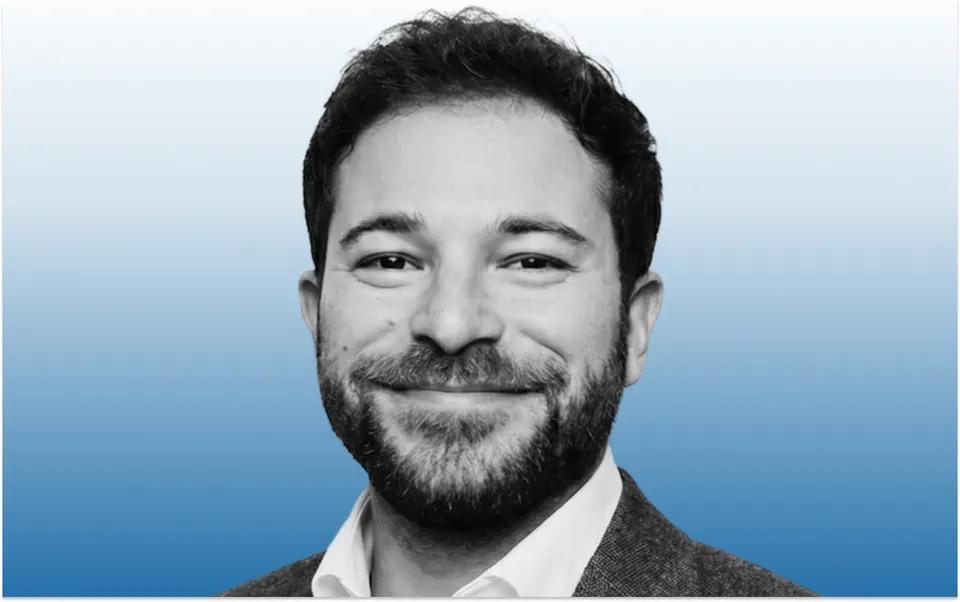
On the third day of the T3 Technology Conference, Larry Roth, Founder and Managing Partner of Ascentix and CEO of Wealth Solutions Report, hosted a panel titled “Driving Growth Through AI-Enabled Operational Excellence,” with John O’Connell, Founder and CEO of The Oasis Group and Rashmi Badwe, Chief Operating Officer of TIAA Wealth Management.
Roth opened the discussion by noting the industry’s challenge of closing the gap between rising client numbers and shrinking advisor numbers. “We have more millionaires being printed than advisors to help them,” he said. AI, he suggested, may help firms scale their services to meet that demand.
O’Connell said the most significant changes will occur in operational workflows rather than the advisor-client relationship. “I don’t think AI is going to replace advisors at all,” he added. “I do think AI is going to radically change the way advisors engage with their clients.”
Advisors will still play a central role, but AI can reduce the operational burden by automating tasks across the middle and back office, according to O’Connell. Currently, many firms rely on manual processes for data transfer, document preparation and account opening, he said.
“In many advisory firms, you may have the advisor with three to five support staff behind them,” O’Connell continued. “I think you’re going to find an advisor with only one or two support staff behind them, and they’re going to be able to handle the same number of clients with a higher level of service.”
For large organizations like TIAA, implementing AI at scale requires both operational discipline and governance, according to Badwe. She described how her firm has paired internal incentives with technology investments to drive efficiency.
“We’ve insisted on a 5% efficiency gain to be baked in every single year,” Badwe said. “It’s a forcing mechanism because teams can’t hit their targets unless they deliver those improvements.”
The firm also established a responsible AI policy outlining how employees can use the technology and built internal AI platforms. Badwe said that most employees adopted AI, using it for purposes including brainstorming, drafting communications and analyzing operational issues.
Badwe said the firm is focusing on AI as a productivity tool rather than a replacement for advisors, in areas including investment research, meeting preparation and fixing not-in-good-order (NIGO) documentation.
Badwe also highlighted estate planning as an area where AI can significantly reduce the work of attorneys, who often spend hours reviewing estate documents and creating diagrams that explain complex structures. “AI can do that in minutes versus hours,” she said. “That’s a massive amount of scaling for us to expand our services.”
“The real power of AI is in being able to reimagine how you do things.” – Rashmi Badwe
While individual use cases produce clear efficiencies, Badwe said firms will ultimately need to rethink workflows more broadly. “The real power of AI is not to improve the way you do things today,” she said. “The real power of AI is in being able to reimagine how you do things.”
That shift requires investment in data infrastructure and employee training, as well as careful system design. Without proper planning, she warned, firms risk creating fragmented technology environments.
For mid-sized RIAs and hybrid firms, O’Connell said the first step is often identifying practical internal use cases. One example involves documenting institutional knowledge that exists only in employees’ minds.
AI tools can interview team members about their workflows and automatically generate documentation and standard operating procedures.
“You can’t scale if the process isn’t written down,” O’Connell said.
When working with executive teams, O’Connell said discussions typically begin by identifying whether a firm wants to drive growth or improve efficiency and deciding how to measure success.
The panel also touched on technology trends aside from AI that could affect wealth management. O’Connell pointed to new investment markets, such as crypto and prediction markets, which are developing outside traditional financial services firms.
Badwe noted another area to watch: tokenization. Over time, she said, blockchain-based tokenization could reshape how securities trade and how portfolios are constructed.
CRM In The Age Of AI

Brooke Deese, Director of Growth and Partnerships at Practifi, sat down with us to discuss how AI is changing CRMs and how advisors use them, and why she believes it will strengthen relationships between advisors and clients.
“I fell in love with CRM because at the heart of a CRM is a relationship,” Deese said. “And that’s really the heart of what every advisor does is the relationship.”
That focus on relationships, she said, explains why CRM systems must be central to the advisory technology stack. While large CRM platforms may serve a wide range of industries, Deese said advisor-focused platforms aim to reflect the operations and client focus of wealth management.
Referencing Practifi’s December integration of several AI tools into its CRM, Deese said Practifi has incorporated AI into meeting intelligence, relationship intelligence and administrative tools designed to streamline workflows.
“We’re not just using AI to say we have AI,” she said.
Among the tools, Deese pointed out that Smart Notes leverages AI to surface relevant details from past interactions with a client, so advisors can identify previous conversations or important relationship details. Deese also pointed to administrative tools that allow firms to build workflows using natural language.
Historically, she said, technology systems required users to adapt to the system’s language and structure. AI tools are beginning to reverse that dynamic.
“Technology expected us to understand its operating language,” Deese said. “Now we’re using our language to update the tech.”
Even as AI becomes more embedded in advisory technology, Deese predicted that the human element of advice will remain central to advisory work and could increase in importance as a differentiator as technology advancements spread across firms. “The human element of any relationship is not something that AI can do,” she said.
She expects advisory firms to increase focus on interpersonal awareness and communication as AI tools handle more administrative tasks, as advisors can detect and interpret tone, context and client concerns in ways AI is not capable of doing. She said that knowledge needs to be captured inside the advisor’s CRM.
Deese also emphasized that the effectiveness of AI ultimately depends on the quality of the data firms maintain. Without accurate and well-organized data, she said, even sophisticated tools will struggle to produce useful results.
“Good data still matters,” Deese said. “No matter what you put on top, you need that good data.”
Julius Buchanan, Editor in Chief at Wealth Solutions Report, can be reached at julius.buchanan@wealthsolutionsreport.com.