

At the 2026 Institute for Portfolio Alternatives (IPA) Summit, held from April 29 to May 1 at the Conrad in Washington, D.C., wealth management leaders discussed how advisors should evaluate private markets amid renewed scrutiny and a Department of Labor (DOL) official addressed how retirement plans may gain broader access to private markets investments under the Employee Retirement Income Security Act (ERISA).
Advisory Firm Executives Tackle ‘Elephant In The Room’: Private Credit
Matthew Malone, Head of Investment Management at Opto Investments, moderated the panel “Inside the Advisor Channel: How Wealth Firms Evaluate Alternatives Alongside Traditional Investments.” The panel included Patrick McGowan, Managing Director, Head of Alternative Investments and Manager Research at Sanctuary Wealth; Robert Picard, Head of Alternative Investments at Hightower Advisors; Karim Simplis, Director, Private Markets at Dynasty Financial Partners; and Will Sterling, Partner at TritonPoint Wealth.
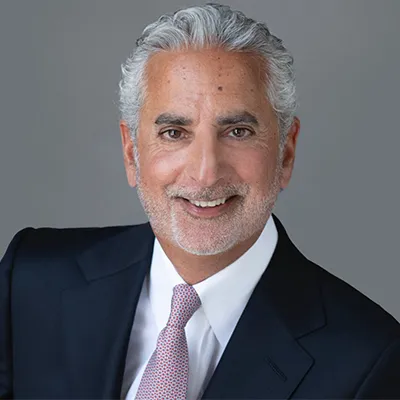
Malone opened with the “elephant in the room”: private credit headlines, client concern and whether wealth platforms are receiving enough support from managers to communicate through volatility.
Picard said the issue was partly a media disconnect. He warned that clients are now absorbing information through faster, less filtered channels.
McGowan compared the moment to prior episodes of market alarm. He said concern had moderated as repeated articles became less effective, but advisors still needed deeper education on valuations, fund exposures and investor behavior.

Simplis said Dynasty had spent months responding to the headlines, including conversations with managers on software exposures. He emphasized that terms matter: “Gating has a very specific connotation, and so we don’t use that word.”
On allocations, McGowan said direct lending had slowed, but private equity, late-stage growth, infrastructure, tax-aware strategies and real estate were seeing interest.
The panel also discussed redemption limits. Simplis said exceeding stated limits could set “a bad precedent.” Picard said the goal is to protect both redeeming and remaining investors.
DOL Assistant Secretary Addresses Retirement And Access To Private Markets
The session “Administrative Action: Retirement Policy and Access to Private Markets” featured Daniel Aronowitz, Assistant Secretary of Labor for the Employee Benefits Security Administration at the DOL.

Aronowitz framed his remarks around what he called two threats to the retirement system: “litigation abuse and regulatory overreach.” He used the Intel 401(k) litigation as an example, describing lawsuits that attacked the plan’s use of hedge funds and private equity.
“The lawsuits were broadly attacking the use of private equity or any alternative investments in retirement plans,” Aronowitz said. He argued that Intel’s fiduciaries sought risk mitigation after the financial crisis, not speculation, and that ERISA claims should evaluate process rather than hindsight results.
The proposed DOL investment selection rule, he said, is intended to provide safe harbors and regulatory clarity. “It is not an alts rule,” he said. “It is an investment selection rule with safe harbors so that plan fiduciaries can do their jobs without undue fear of being sued.”
He identified three principles behind the rule: process, discretion and deference. “ERISA is a law of process,” he said. “It requires prudence, not prescience.” He added that fiduciaries must follow an “objective, thorough and analytical” process, which he said is rigorous rather than a “check-the-box exercise.”
Aronowitz described six factors for evaluating plan investments: performance, fees, liquidity, valuation, performance benchmarking and complexity. On fees, he said fiduciaries do not have to choose the lowest-cost product if another offers greater value.
Benchmarking must be meaningful, according to Aronowitz. “The S&P 500 index is not a meaningful comparator for every investment,” he said.
Asked whether fiduciaries could still be prudent outside the safe harbor, Aronowitz answered directly: “There are absolutely multiple ways to have a rigorous process in which you’re objective, thorough and analytical. There’s no one right way.”
Julius Buchanan, Editor in Chief at Wealth Solutions Report, can be reached at julius.buchanan@wealthsolutionsreport.com.


