

AI has been operating within wealth management for years. The pace of recent advancements and growing adoption across more operational areas has amplified discussions around it, as has the need for productivity gains to help bridge the demographics-driven advisor shortfall. A recent Fidelity study indicated that over two-thirds of wealth management industry respondents are either piloting or using generative AI at scale within their firms.
Then came Claude for Financial Advisors, which some have hailed as a specialized, dedicated AI tool designed specifically to address the needs of professionals in the advice business. They say it delivers a unified workspace layer to integrate and automate disparate functionality, with a singular focus on elevating financial advisor workflows and facilitating efficiencies. Novel idea or novelty?
To help derive a better understanding of what the introduction of Claude for Financial Advisors means to advisors and our industry today and over time, we spoke to four wealthtech executives whose firms are at the forefront of AI-driven support for the wealth management industry:
- Anshuman Mehta, Chief Product Officer at Domify, an AI platform focused on compliance and regulatory oversight for wealth management firms
- Zack Khan, Co-Founder at Feathery, an AI data intake and workflow platform for wealth management firms
- Brian Scott, Head of Product and Co-Founder at WealthFeed, an AI-based prospecting and client engagement platform for financial advisors
- Sindhu Joseph, Founder and CEO at CogniCor, a provider of AI-enabled digital assistants and platforms for financial services firms
We asked each of them: What does Claude for Financial Advisors change for AI companies already serving wealth management, and is it disruptive or validating for your segment specifically?
Their responses follow:
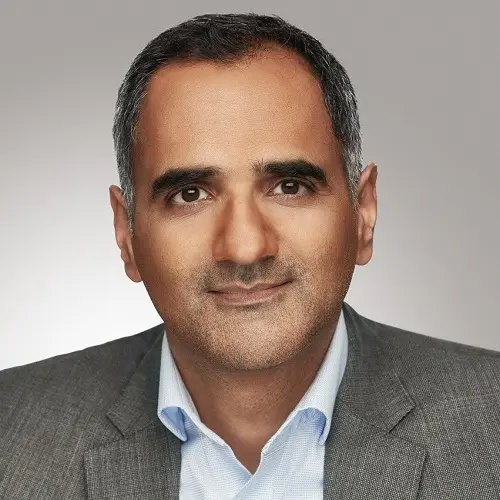
Mehta: The technology environment within wealth management remains incredibly fragmented, and no two firms run the same stack or rely on the same mix of data and service providers. Advisors and compliance professionals still swivel between siloed systems to get work done, with each additional system adding more friction.
Anthropic’s decision to build specifically for financial advisors reflects both the scale of those inefficiencies and the opportunity for AI to address them and validates our firsthand experience in this space. Anthropic’s models, combined with new integrations across the wealth technology ecosystem, will help establish critical building blocks that can accelerate delivery of AI solutions to the wealth management industry.
Domify works with the biggest wealth enterprises in this space. Our clients have the business need, the in-house expertise and the data. The biggest hurdle they face is figuring out where and how to start their AI journey, and how to build AI systems they can monitor and trust at scale. Startups like Domify play an important role in this process, leveraging our deep domain expertise to build complex AI systems, introduce innovations that solve data engineering and observability problems and act as trusted advisors to our clients on their journey. That is particularly true in compliance and regulatory oversight, where the stakes for getting AI right are high and where Domify focuses.
Firms like ours work across the industry and build model-agnostic applications. Anthropic’s move turbocharges what we can build and deliver on behalf of our clients. We believe other providers will follow suit. We continue to advise enterprise clients to stay model-provider agnostic and keep open-source models in their approved mix. Enterprises should remain in control of their data and model choices, including the token costs that come with them. Healthy competition among providers is what keeps those choices in their hands.

Khan: There’s a battle happening right now for which user interface (UI) will be the one tool that advisors use to do their work: Claude for Financial Advisors (new) versus Salesforce (the incumbent for most firms).
Claude acts as an orchestrator of different tools: You still need your financial planning tools (eMoney, etc.), estate planning systems and more. The only thing changing is the proposed entry point and interface.
Ultimately, Claude is a chat interface, and that is not the only interface an advisor needs. Some firms may want their advisors to start in Claude; others may want to start in another system like Salesforce. The key aspect is choice.
For specialized wealthtech companies, exposing platform functionality to different UIs is nothing new. Every wealthtech firm should already be adding Model Context Protocol (MCP) servers to allow advisors/firms using Claude to easily grab data and take actions from that wealthtech’s tool via Claude. For example, Feathery has supported this for over a year.
What Claude lacks is deep expertise, integrations and complexity for specific workflows that it cannot replicate with pure intelligence alone. For example, for Feathery as an AI account opening and proposals solution, we understand all the required fields for opening complex account types across all major custodians, regulatory complexity for M&A/transitions, proposals compliance and more. Claude also lacks the ability to create end-to-end non-chat interfaces. For example, a transitions workflow requires creating a compliant UI for clients to authorize sharing sensitive information, and then reliably syncing that data to core systems and custodians (something you can’t just “vibe code” with Claude).

Scott: The launch confirms the direction we’ve been moving toward: the AI assistant is becoming the front door to the advisor’s tech stack, and Anthropic built it as an open ecosystem rather than a walled garden. Claude for Financial Advisors doesn’t generate proprietary intelligence. It connects to it. That architecture choice matters more than any single feature.
For growth and client acquisition specifically, the question shifts from “which AI tool do I log into” to “what does my AI actually know.” Claude can prep your next meeting from your CRM, but it can’t tell you which client just sold a business or which prospects in your market have money in motion right now. That intelligence has to come from somewhere. Companies with proprietary signal data become more valuable in this world, not less, because the assistant layer amplifies whatever you feed it.
The disruption is real for one category: thin wrappers around general-purpose models. If your product is a chat interface plus a prompt, Anthropic just shipped your roadmap. Workflow automation is now table stakes from the model providers themselves. At WealthFeed, we’ve wanted to bring something to market in this space for a while, but the ecosystem wasn’t ready. This launch of Claude for Financial Advisors signals that it is.

Joseph: The launch of Claude for Financial Advisors validates our thesis that wealth management firms — and RIAs in particular — need an intelligence orchestration layer to seamlessly integrate a fragmented advisor tech stack, workflow and data sources. Our clients have already been doing exactly what Anthropic offers with its newest product. CogniCor’s platform already builds on Claude as that orchestration layer, helping firms work seamlessly across their entire data and workflow environment, with measurable gains in efficiency, productivity and organic growth.
While this new offering will make advanced AI more accessible to the industry, create another route for firms to apply specialized wealth intelligence and push technology providers to compete on what they deliver, it isn’t revolutionary. We’ve been doing this for years, and we’re thrilled to see the industry grasp the incredible value of a highly specialized, targeted orchestration layer.
On the other hand, we believe this will put significant pressure on vertical AI platforms serving wealth management to prove the quality of their intelligence, given that most of them claim to be all-in-one intelligence platforms. Marketing dollars alone can’t address this kind of shift in industry expectations.
There’s no question that the importance extends beyond the announced capabilities. Claude introduces another possible entry point to a system that includes RIAs, advisors, clients, custodians, CRMs, portfolio and planning platforms and vertical AI companies.
The key questions are who maintains the household’s continuous context, who interprets it, who owns the interface and who remains accountable for the advice. The wealth management ecosystem must now determine how intelligence, responsibility and trust flow through it.
Wealth Solutions Report can be reached at info@wealthsolutionsreport.com.


